Skincare
Broad spectrum matters more than chasing a bigger number
Ultraviolet A and ultraviolet B do different things to skin, and only one of them is what SPF measures. Here is how the second half of the label works.
These are listed in the order worth acting on, which with broad spectrum protection is not the order they are usually presented in.
What matters most
- SPF describes ultraviolet B, which drives burning.
- Ultraviolet A penetrates deeper and passes through window glass.
- Different regions use different symbols for the same underlying idea.
Two ranges, two behaviours
Ultraviolet B carries more energy per photon and is absorbed in the upper layers, where it causes the redness everyone recognises as sunburn. Ultraviolet A has a longer wavelength, penetrates further into the dermis and is present at a fairly steady level through daylight hours and seasons. Because ultraviolet A produces far less immediate redness, a sunscreen could score highly on SPF while offering little protection against it.
That gap is precisely why regulators across several regions introduced separate ultraviolet A requirements and symbols rather than trusting the SPF figure alone. Photoageing and pigment responses are associated more strongly with the longer wavelengths, which is the honest reason daily protection is discussed at all.
How different markets label it
In the European Union, a circled UVA mark indicates the product meets a defined ratio, with ultraviolet A protection at least a third of the labelled SPF. Several Asian markets use a PA system with plus signs, based on a persistent pigment darkening test rather than on redness.
On the ingredient list, in the United States the phrase broad spectrum is a regulated claim tied to a critical wavelength test, so the words carry a specific meaning. Australia and the United Kingdom have their own frameworks, and star ratings on some products describe a ratio rather than an absolute level. The systems are not directly convertible into one another, which is worth remembering before comparing two bottles bought in different countries.
Why the ratio idea matters
A protection ratio means ultraviolet A cover scales with the SPF figure, so a very high SPF with a minimal ratio can still leave a gap. Two products both labelled SPF 50 can differ meaningfully in their ultraviolet A performance depending on the filter system used.
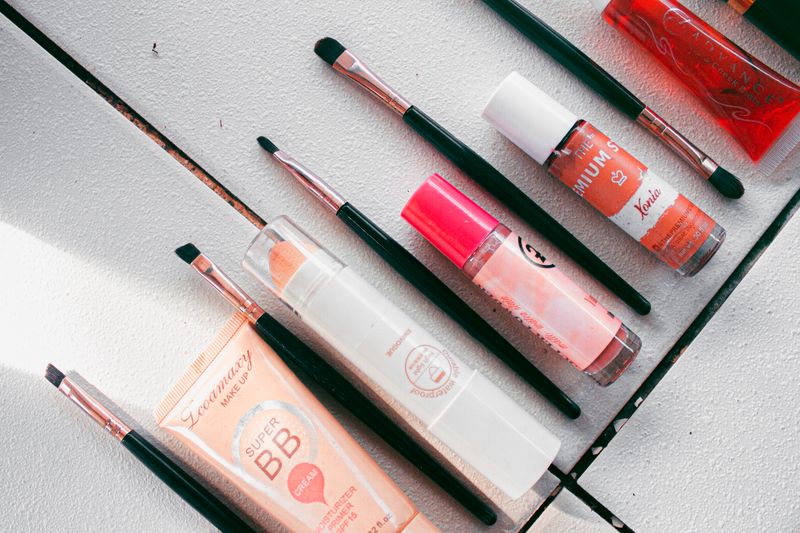
Under makeup, filter availability differs by jurisdiction because some regions regulate sunscreen as a cosmetic and others as an over-the-counter drug. This is why formulations sold in Europe or Korea sometimes contain filters unavailable elsewhere, rather than any mystique about foreign skincare. None of this makes one market's products universally better; it makes label systems genuinely non-comparable.
Glass, cloud and indoor exposure
Ordinary window glass blocks most ultraviolet B while transmitting a substantial share of ultraviolet A, which is why a sunlit desk is not neutral. Laminated windscreens block more than side windows do in many vehicles, an asymmetry that shows up in long-distance drivers. Cloud scatters and reduces ultraviolet, but thin or broken cloud can reduce it surprisingly little and occasionally increases it briefly.
Snow, water and pale sand reflect ultraviolet upward, adding exposure to areas a hat would otherwise shade. Altitude increases intensity as well, since less atmosphere sits between the surface and the source.
What visible light adds
Research interest has shifted partly towards visible light, particularly the blue end, in relation to pigment responses in deeper skin tones. The evidence base here is younger and less settled than the ultraviolet literature, and it is fair to describe it as promising rather than proven.
Tinted sunscreens contain iron oxides, which absorb some visible light and are the practical reason tints appear in this conversation. For someone whose main concern is uneven pigment, a tinted formula is a reasonable choice, but it should be described as plausible rather than established. Screens emit a tiny fraction of what a window does, so the panic about phone light does not survive a comparison of intensities.
Patch test anything new, and introduce one active at a time so you can tell what did what.
Choosing without overthinking
Find a formula with a credible ultraviolet A indication for your market, at SPF 30 or above, that you find genuinely pleasant to wear. Cosmetic elegance is not vanity here; it is the variable that determines whether the product is on your face at all.
On a compromised barrier, layering two sunscreens does not add their numbers together, and patchy layering can leave thin spots rather than doubled cover. If a product causes stinging, breakouts or a rash, stop and try a different filter system rather than persevering through it. Photosensitising medications and skin conditions change the calculation entirely, and that is a conversation for a doctor or pharmacist.
Everything above, in order of what to do first
- Two ranges, two behaviours. Ultraviolet B carries more energy per photon and is absorbed in the upper layers, where it causes the redness everyone recognises as sunburn.
- How different markets label it. In the European Union, a circled UVA mark indicates the product meets a defined ratio, with ultraviolet A protection at least a third of the labelled SPF.
- Why the ratio idea matters. A protection ratio means ultraviolet A cover scales with the SPF figure, so a very high SPF with a minimal ratio can still leave a gap.
- Glass, cloud and indoor exposure. Ordinary window glass blocks most ultraviolet B while transmitting a substantial share of ultraviolet A, which is why a sunlit desk is not neutral.
- What visible light adds. Research interest has shifted partly towards visible light, particularly the blue end, in relation to pigment responses in deeper skin tones.
- Choosing without overthinking. Find a formula with a credible ultraviolet A indication for your market, at SPF 30 or above, that you find genuinely pleasant to wear.
The takeaway
Check the ultraviolet A mark before you compare SPF figures, because the second number is the one most people ignore.
Sunscreen, consistency and time outperform nearly everything sold as a breakthrough.
Questions readers ask
Is mineral sunscreen better for ultraviolet A?
Zinc oxide covers a wide range including much of the ultraviolet A band. Modern organic filter systems also cover it well, so the category alone does not decide it.
Does makeup with SPF count as broad spectrum?
Only if it is labelled as such, and even then the applied thickness is far below the test amount. Treat it as a small supplement to a dedicated layer.
Also by Mehak Chhabra
- A cleanser has one job, and the tight feeling means it overdid itSkincare
- An SPF number is a ratio, which is why how you apply it decides everythingSkincare
- Sunscreen under makeup: what survives the morning and what does notSkincare
- Exfoliation is subtraction, and most faces get more of it than they needSkincare