Makeup
Blush placement changes a face more than blush colour does
Where colour sits alters perceived proportion and structure. Shade choice is a much smaller lever than most people assume.

This is less a set of instructions about blush placement than an argument, and it is worth saying so at the start.
The argument in brief
- Higher placement reads as lifted, lower as softer and rounder.
- Colour intensity is controlled by build, not by shade choice.
- Formula determines how much control you have over the edges.
Placement as structure
Colour placed high on the cheekbone and swept slightly toward the temple draws the eye upward and reads as a lifted face. Colour placed lower and more centrally on the apple emphasises roundness and reads younger and softer. Colour extended across the nose bridge creates a unified flush that reads as warmth rather than as makeup.
The same product placed in these three ways produces three visibly different results with no change of shade. This is why placement advice varies so much between eras and why it is worth experimenting rather than following rules.
Intensity is built, not chosen
Almost any blush can be worn sheer or strong, and the difference is how much product is picked up and how it is layered. Tapping excess from a brush before it touches the face prevents the first application from being the strongest one.
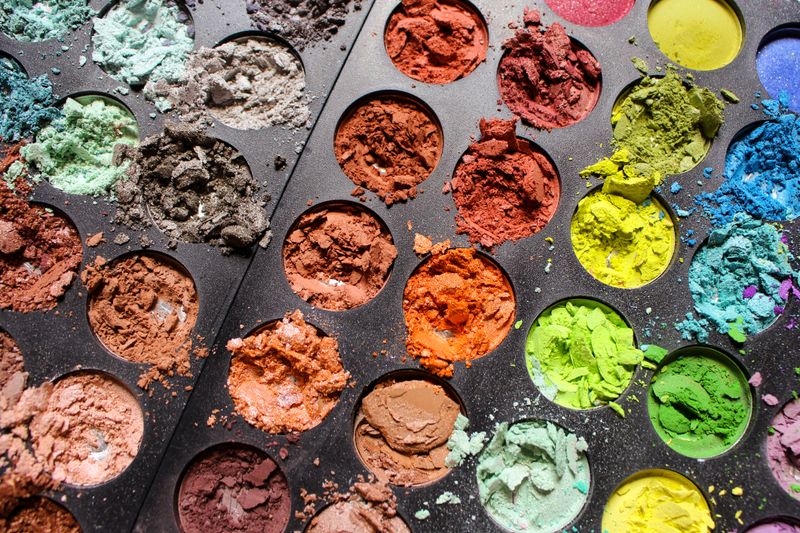
Building in two or three light passes gives control that a single heavy application never does. A shade that looks alarming in the pan is frequently subtle on the face, and judging from the pan is unreliable. Pigment load varies enormously between products, which is why the same technique gives different results across brands.
Formula changes the edges
Powder blush sits on the surface and can be softened easily with a clean brush, which makes it the most forgiving format. Cream blush blends into the base and gives a finish that looks like colour from underneath rather than dust on top. Liquid and gel stains bind to the skin surface and are extremely long-wearing, at the cost of being unforgiving once placed.
On the ingredient list, stains in particular need to be applied in small quantities and blended immediately, since they set within seconds. Choosing format by how much control you want is more useful than choosing by finish.
Working with your own colouring
Blush works partly by echoing the natural flush of the face, so shades in that family tend to look coherent. Deeper skin tones generally need more pigment load rather than a different hue, and sheer formulas often disappear entirely. Cool pinks, warm corals and berry tones all suit a wide range of people, and the old undertone rules are far more rigid than reality.
Testing on the cheek rather than the hand is essential, since blush interacts with the base beneath it.
The only real test is daylight, since indoor lighting flattens colour differences considerably.
Interaction with the rest of the face
Blush sitting too close to the eye can compete with eye makeup and make the area look crowded. Blush placed below the level of the nose tends to drag the face downward visually.
Under makeup, coordinating blush with lip colour is not compulsory, but wildly opposed temperatures can look accidental rather than deliberate. Bronzer and blush occupy overlapping areas, and applying bronzer first gives a clearer sense of where blush should sit. A face with blush and nothing else frequently looks better than a face with everything except blush.
If you are pregnant, breastfeeding or using prescription treatment, check specific actives with a doctor or pharmacist before adding them.
Common errors
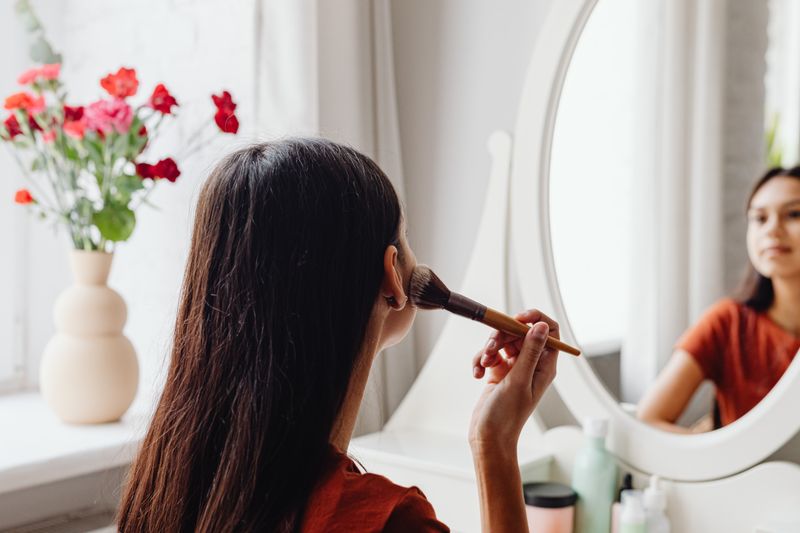
Loading the brush directly and applying to the fullest part of the cheek deposits the most colour in the least flattering spot. Blending in circles moves the base underneath and creates a patchy halo rather than a soft edge. Applying blush before the base is set drags both, particularly with powder over an unset foundation.
At the strengths actually sold, judging placement in a mirror held close, rather than at arm's length, distorts the sense of proportion. Photographs in daylight are the most honest feedback available and consistently reveal placement problems mirrors hide.
The takeaway
Move the colour before you change the colour, because placement is doing most of the work.
Skin changes slowly. Anything promising otherwise is selling the promise.
Questions readers ask
Where should blush go if I want a lifted look?
Higher on the cheekbone, angled slightly toward the temple, with the strongest concentration away from the centre of the face.
Is cream or powder blush better for dry skin?
Cream generally, since it does not emphasise texture the way powder can and it blends into the base rather than sitting on top.
Also by Ridhima Passi
- Niacinamide is the least dramatic active on the shelf, which is why it stayedIngredients
- Preservatives are the reason your cream is not a petri dishIngredients
- Foundation matching fails on undertone far more often than on depthMakeup
- Foundation oxidation is real, and it is not usually the foundation's faultMakeup