Makeup
Eyeshadow is pigment held in a binder, and the binder decides everything
Why one shade grabs and another slides, why loose glitter behaves differently from pressed, and why the same colour looks like two colours on two lids.
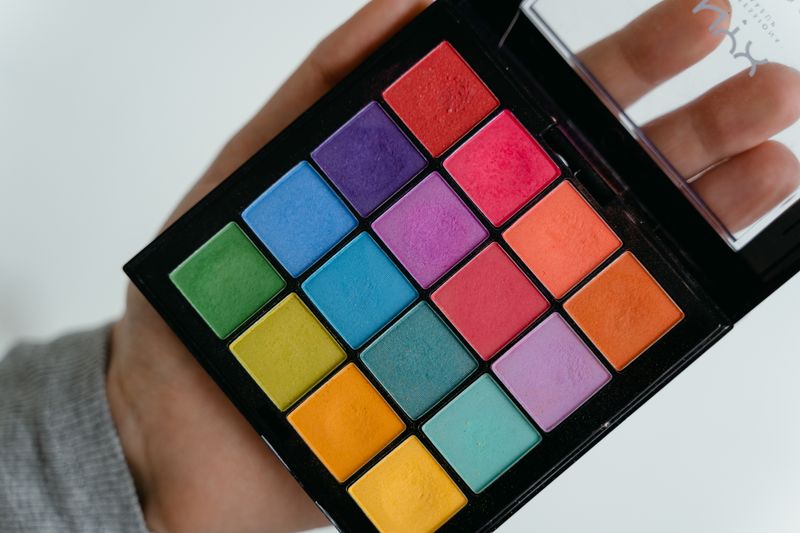
This looks at eyeshadow formulation from the practical end — what holds up once conditions stop being ideal.
What holds up in practice
- Pressed shadow is powder held together by binders that also affect blendability.
- Shimmer particles need more binder, which changes how they apply.
- Lid oil dissolves binders and is the main cause of creasing.
What is in the pan
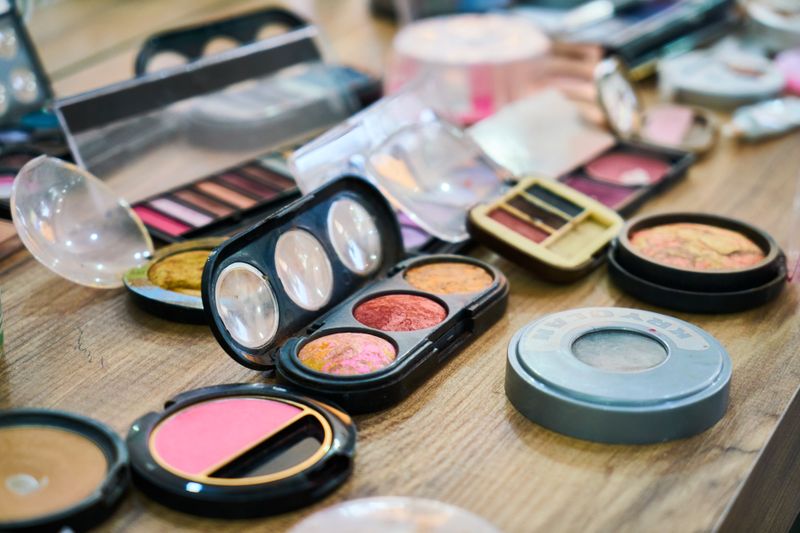
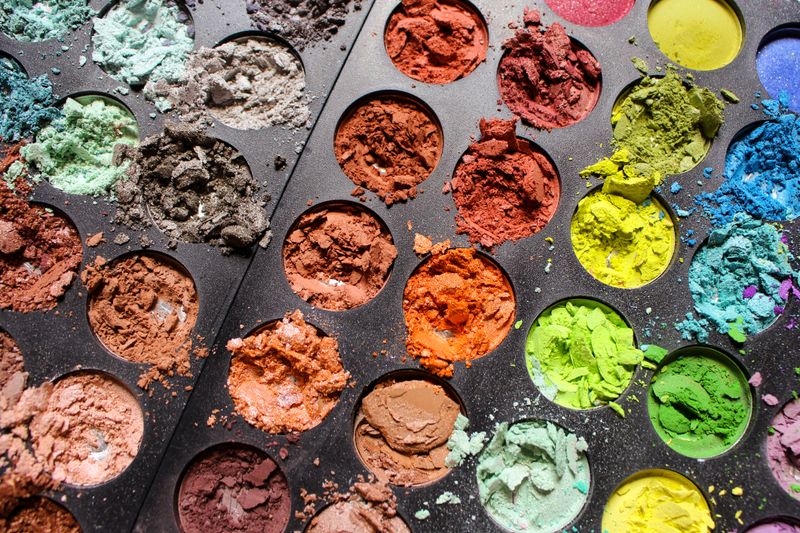
A pressed eyeshadow is mostly filler powders such as talc or mica, carrying pigment and held together by a small proportion of binder. Binders are usually esters, silicones or light oils, and their quantity determines whether the pan presses cleanly or crumbles. Too little binder gives a chalky shadow that kicks up dust, and too much gives a hard pan that resists a brush.
The filler affects blendability directly, which is why two shadows with identical pigment can behave completely differently on a lid. Price correlates loosely with binder quality and pigment load, and the correlation is far weaker than the industry implies.
Matte, satin and shimmer are different problems
Matte shades rely on pigment and filler alone, which makes them easy to blend and prone to looking patchy over uneven skin. Shimmer comes from reflective particles, usually mica coated with something to produce colour, and those particles need more binder to stay put. That extra binder is why shimmers often apply better with a fingertip, since warmth and skin oil help the particles adhere.
Metallic and foil finishes push this further, using large flat particles that need a tacky base to lie flat rather than scatter. Applying a shimmer with a dry brush over a dry lid wastes most of the product on the surrounding skin.
Why the same shade looks different on two people
Eyeshadow is rarely fully opaque, so the colour of the lid beneath contributes to what you see. Lids with visible pink or blue tones shift cool shades further and can neutralise warm ones considerably. Skin oil on the lid changes the refractive environment around the particles, which alters both intensity and finish.
Lid texture and how much the skin folds decide how much of an applied colour is actually visible when the eye is open. A shade that looks nothing like the pan is usually reporting all of these at once rather than being poorly made.
Creasing and what causes it
Eyelids carry oil glands and are constantly moving, which is the least hospitable environment for a powder product on the face. Sebum dissolves the binders holding pigment in place, and movement then gathers the loosened product into the crease. A primer works by creating a layer that grips pigment and absorbs some of the oil before it reaches the shadow.
On a compromised barrier, setting the lid with a light dusting of translucent powder before shadow achieves much of the same effect at no extra cost.
Cream shadows crease more readily on oily lids unless they are the setting type that dries down to a film.
Application mechanics
A dense brush deposits colour and a fluffy brush moves it, and using one for both jobs is the most common technique problem. Building in thin layers gives control, while loading a brush heavily deposits a hard edge that then has to be blended out. Tapping excess off the brush before it reaches the face prevents most fallout under the eye.
Doing eye makeup before base means fallout can be cleaned away without disturbing a finished foundation. Blending is moving a boundary rather than moving colour, and once the boundary is soft the job is finished.
Patch test anything new, and introduce one active at a time so you can tell what did what.
Loose pigments and glitter
Loose pigment contains no binder at all, which is why it applies more intensely and travels everywhere without a sticky base. Cosmetic glitter comes in sizes and shapes that determine sparkle, and adhesive designed for the eye area is not optional with the larger grades. Craft glitter is not manufactured to cosmetic standards and has no business anywhere near an eye.
Under makeup, any product entering or irritating the eye repeatedly should be stopped, and persistent eye irritation is a matter for a doctor. Removal matters here as much as application, since dragging glitter off thin lid skin does more damage than wearing it did.
The takeaway
Shadow behaves the way its binder allows, which is why technique fixes more problems on a lid than shopping does.
A short routine you finish beats a long one you resent.
Questions readers ask
Why does my eyeshadow disappear by lunchtime?
Lid oil dissolves the binder holding pigment in place. A primer or a light dusting of powder on the lid before shadow addresses the cause.
Do expensive palettes actually perform better?
Sometimes, through higher pigment load and better binders. The correlation is loose, and formulation skill matters far more than price.
Also by Ridhima Passi
- Niacinamide is the least dramatic active on the shelf, which is why it stayedIngredients
- Preservatives are the reason your cream is not a petri dishIngredients
- Foundation matching fails on undertone far more often than on depthMakeup
- Foundation oxidation is real, and it is not usually the foundation's faultMakeup