Makeup
Highlighter is a particle size problem before it is a colour choice
The difference between a lit-from-within glow and visible glitter is the diameter of the reflective particles, not the shade or the price of the compact.
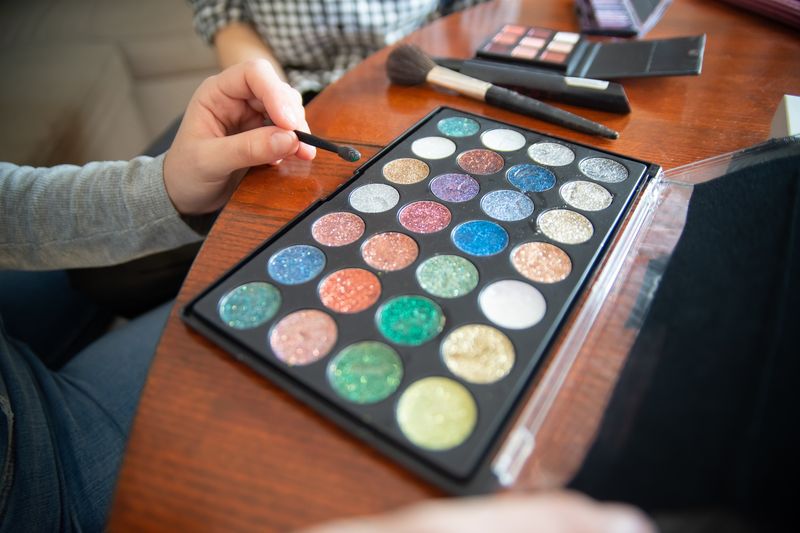
Most explanations of highlighter particle size stop at the point where it starts to matter. This one carries on.
The short version
- Small finely milled particles scatter light and read as glow.
- Large flat particles reflect as distinct points and read as glitter.
- Texture on the skin beneath is amplified by anything reflective.
What is doing the reflecting
Almost every highlighter relies on mica, a naturally layered mineral milled into flat plates that reflect light from their surfaces. Those plates are often coated with titanium dioxide or iron oxides, and the thickness of that coating produces the colour you see.
Synthetic fluorphlogopite, frequently listed as synthetic mica, performs the same job with more consistent particle size and fewer impurities. The pigment sitting alongside these plates determines the undertone, but the plates themselves determine whether the effect reads as glow or sparkle. This is why two highlighters in identical shades can look completely different on the same cheekbone.
Particle size decides the finish
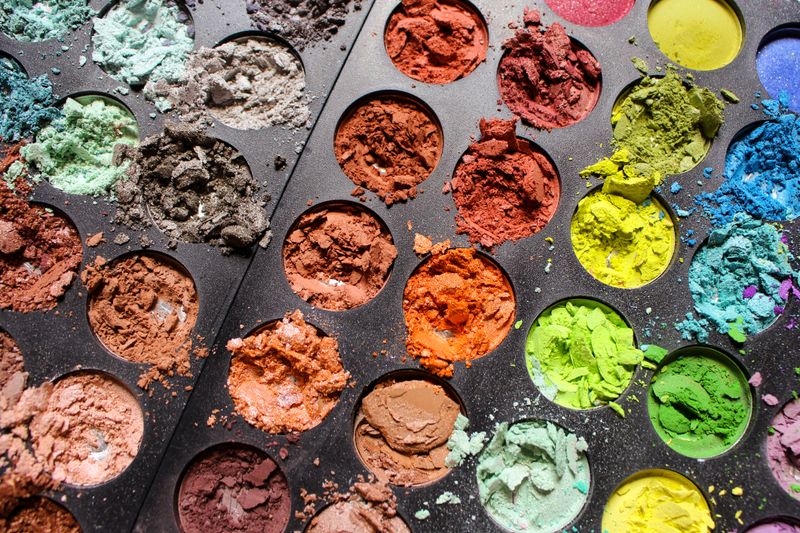
Very finely milled particles scatter light in many directions at once, and the eye reads that diffuse return as a soft internal glow. Larger plates reflect as distinct bright points, and once the individual points are visible the effect is glitter rather than luminosity. Between the two sits a range of finishes that catalogue copy calls satin, pearl, metallic and foil in no consistent order.
The finish descriptor on a package is unreliable, and looking closely at the pan under a light tells you far more. A finely milled product can be built up to intensity, whereas a coarse one becomes more obviously glittery with every layer.
Why texture gets amplified
Anything reflective draws the eye to whatever it sits on, which means pores, fine lines and flaking are made more visible rather than less. A raised edge catches light on one side and casts a shadow on the other, and adding reflectance exaggerates both halves. Placing highlighter on a well-prepared, smooth area and avoiding textured ones is a placement decision rather than a product one.
Cream and liquid formulas generally handle texture better because they contain no loose powder to settle into a crevice. On skin with visible texture, a satin base finish across the whole face often reads better than any concentrated highlight.
Placement and the shape of a face
The tops of the cheekbones, the brow bone, the inner corner of the eye and the cupid's bow are the conventional positions. Those positions correspond to where light would naturally hit a face, which is the same logic that governs bronzer. Extending highlight too far down the cheek widens the apparent face, since the eye reads the brightest area as the closest.
A narrow, precisely placed line reads as structure, and a broad wash of shimmer reads as an overall sheen.
The nose bridge is the most commonly overdone area, because any reflectance there is seen straight on rather than at an angle.
Matching the shade to the skin
Champagne and gold tones suit warm and deeper complexions because the reflected colour sits close to the natural undertone. Pearl and silver tones read cleaner on cool and fairer complexions and can look ashy on deeper ones.
Bronze and copper highlights work particularly well on deep skin because the reflected warmth matches rather than contradicts. Pink-toned highlighters are the most forgiving across a wide range, since pink sits between the warm and cool extremes. The reflected colour matters more than the pan colour, and tilting the compact under a light shows you the difference.
Patch test anything new, and introduce one active at a time so you can tell what did what.
Formula and layering order
Cream and liquid highlighters go on before powder, since anything applied over set powder disturbs the layer beneath it. Powder highlighters go last and are best applied with a small fan or tapered brush that deposits very little at a time. Mixing a liquid highlighter into foundation gives an overall luminosity without any concentrated point of reflection.
On a compromised barrier, setting spray applied over a powder highlight melds the particles into the base and softens an over-enthusiastic application. The reliable technique is starting with less than you want, since removing highlight without disturbing the base is nearly impossible.
The takeaway
Look at the size of the particles in the pan, because that decides the finish long before the shade does.
A short routine you finish beats a long one you resent.
Questions readers ask
Why does my highlighter look glittery rather than glowy?
The reflective particles are too large. Finely milled products scatter light diffusely; coarse ones reflect as visible individual points.
Should I use cream or powder highlighter?
Cream suits drier and more textured skin because it adds no powder. Powder suits oilier skin and builds more precisely on a set base.
Also by Ridhima Passi
- Niacinamide is the least dramatic active on the shelf, which is why it stayedIngredients
- Preservatives are the reason your cream is not a petri dishIngredients
- Foundation matching fails on undertone far more often than on depthMakeup
- Foundation oxidation is real, and it is not usually the foundation's faultMakeup