Skincare
Eye cream is thinner skin first and a different formula second
The skin around the eye is genuinely built differently, which changes what suits it. Whether that requires a separate jar is a much weaker argument than the packaging suggests.

What follows is the working version of eye creams: the decisions in the order you actually meet them, with the reasoning attached.
Before you start
- Skin around the eye is thinner and carries far fewer oil glands.
- Most eye creams are moisturisers with a lighter texture and a gentler active load.
- Dark circles have several unrelated causes and most are structural.
How the skin there differs
The skin over the eyelid and beneath the eye is among the thinnest on the body, with a shorter distance between surface and blood vessels. It carries very few sebaceous glands, so it produces almost none of the sebum that keeps the rest of the face pliable. It moves constantly, blinking many thousands of times a day, which puts repeated mechanical stress on a thin and lightly supported structure.
Together these mean the area dries out faster, shows fine lines earlier and reacts to strong actives sooner than the cheek does. That is a real anatomical difference, and it is the entire legitimate basis for treating the area separately.
What is actually in an eye cream
Most are moisturisers with a lighter texture, a lower fragrance load and a reduced concentration of whatever active the brand also sells for the face. Some add caffeine, which constricts small blood vessels temporarily and can reduce the look of puffiness for an hour or two. Some add light-scattering pigments or silicones that blur the shadow optically, which works and washes off exactly as it should.
Under makeup, peptides appear frequently, and the honest position is that the supporting work is promising rather than settled for the eye area specifically. The formula is usually reasonable; the price per millilitre is where the argument becomes harder to defend.
Whether you need a separate product
A gentle facial moisturiser without high fragrance or strong actives is usually appropriate around the eye as it stands. The case for a dedicated product is strongest if your face moisturiser is heavily fragranced, heavily active or too rich for the area.
Under makeup, products containing acids, high-strength vitamin C or retinoids at facial concentrations are the ones worth keeping away from the orbital rim. If a face cream causes milia or irritation there, switching to something lighter matters more than switching to something labelled for eyes. Nobody has poorer skin around the eye for using one good moisturiser everywhere, provided it suits the area.
Dark circles are several different problems
Some are pigmentation in the skin itself, which is common in deeper skin tones and responds slowly to anything at all. Some are vascular, where thin skin lets the blue-purple of underlying vessels show through, and no cream changes what sits beneath.
After four to six weeks, some are structural shadow cast by the hollow between the lower lid and the cheek, which is anatomy rather than colour. Working out which one you have decides whether a topical product has any plausible route to help, and often it does not.
A dermatologist can distinguish these in a way that no amount of reading and product-buying will.
Puffiness and what moves it
Morning puffiness is usually fluid that pooled while lying flat, and it drains over the first hour or two of being upright. Salt, alcohol, poor sleep and crying all shift how much fluid collects, which is why the same eyes differ enormously between mornings.
On a compromised barrier, cold constricts vessels and reduces the swelling briefly, which is why a chilled metal applicator feels effective without doing anything lasting. Persistent puffiness that does not resolve through the day, or swelling on one side only, is worth a medical opinion rather than a product. Allergy is a common and treatable cause, and a pharmacist is the right first stop if that seems likely.
Applying it without causing damage
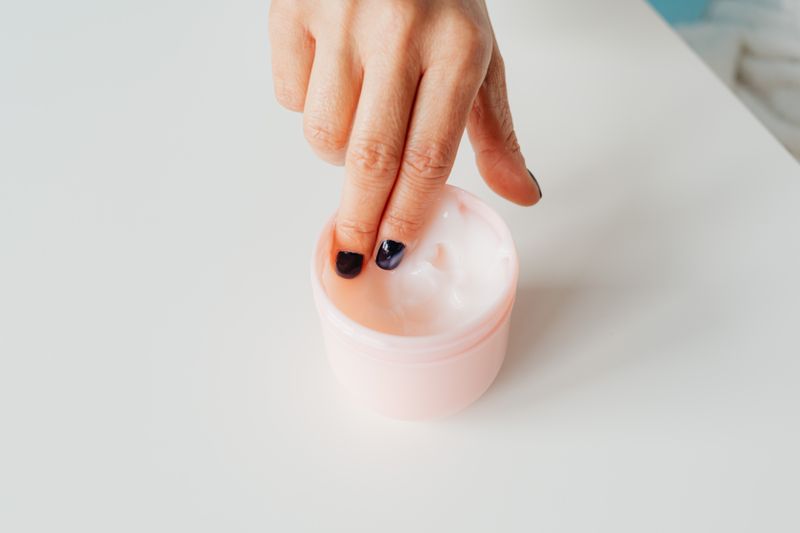
A quantity around the size of a grain of rice per eye is enough, and more simply migrates into the eye and stings. Tapping with the ring finger along the orbital bone rather than dragging across the lid avoids stretching skin with very little support beneath it.
Staying on the bone rather than close to the lash line reduces migration, since warmth spreads product upward on its own. Heavy occlusive products under the eye can cause milia in some people, and switching to a lighter texture usually resolves it. Anything that makes the eye water repeatedly should be stopped, because that is irritation rather than an adjustment period.
The takeaway
Treat the eye area as thin, dry and mobile skin, and the question of which jar it comes from matters far less.
A short routine you finish beats a long one you resent.
Questions readers ask
Can I use my face moisturiser around my eyes?
Usually yes, if it is gentle, lightly fragranced and not carrying strong actives. Watch for stinging or milia and switch to something lighter if either appears.
Do eye creams remove dark circles?
No. They can hydrate, blur optically and reduce puffiness briefly. Pigmentation, visible vessels and structural shadow are not things a cream removes.