Hair
Hair grows about a centimetre a month, and nothing changes that much
Length is a function of time, growth rate and how much breaks off the end. Only one of those three is genuinely under your control.
Everything below about hair growth rate comes from what actually happens rather than from what is supposed to.
What holds up in practice
- Scalp hair grows at roughly a centimetre a month for most people.
- Each follicle runs a growth cycle lasting several years.
- Length retention depends on breakage, not on growth speed.
The rate and what sets it
Scalp hair grows at somewhere around a centimetre a month for most adults, which comes to roughly twelve to fifteen centimetres a year. That rate is largely determined by genetics, general health and age, and it varies modestly between individuals. Growth happens at the follicle beneath the skin, where living cells divide and push keratinised material upward.
Everything above the scalp is dead protein, which is why nothing applied to the length can affect the rate at all. A product would have to affect the follicle to change growth speed, and that places it firmly in medical territory.
The cycle behind maximum length
Each follicle runs through a growing phase lasting several years, a short transitional phase and a resting phase before shedding. The length of the growing phase differs between people and between follicles, which is why some people can grow hair to the waist and others cannot. Terminal length is reached when hairs shed at the end of their cycle before growing any longer, and no product extends that phase.
After four to six weeks, body hair has a much shorter growing phase, which is why eyebrows and eyelashes stay short without being cut. Accepting a genetic terminal length saves a great deal of money spent on products that cannot influence it.
Why length seems to stall
Hair that appears to stop growing is usually growing normally and breaking off at a rate that matches the growth. Ends are the oldest part of the strand and have endured every wash, brush, heat application and colour treatment since they emerged. A strand four years old at the tip has been through several thousand mechanical and thermal events.
Reducing breakage is therefore the only meaningful lever on length, and it works on a scale of months. This is the single most useful reframing available to anyone frustrated by their hair length.
What actually protects length
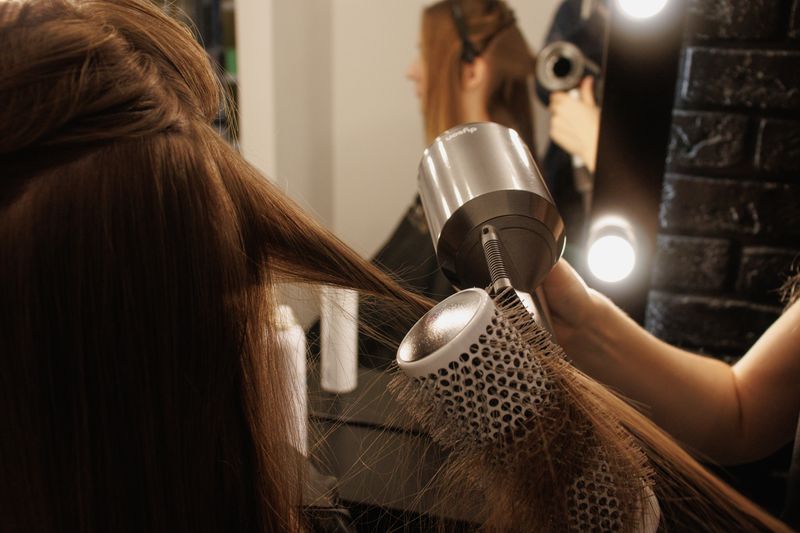
Reducing heat styling frequency, and using lower temperatures when you do, prevents a large share of cumulative damage. Detangling from the ends upward with a wide-toothed comb on conditioned hair reduces the force applied to any single point. Protective and low-manipulation styles reduce daily mechanical stress, which matters most for fragile or highly textured hair.
Silk or satin surfaces at night reduce friction against the pillow, which is a small effect repeated three thousand times a year.
Regular trims do not speed growth and do remove split ends before they travel further up the strand.
Supplements and growth claims
Nutritional deficiencies genuinely affect hair, and correcting a real deficiency can improve growth and shedding. Taking supplements without a deficiency has no established benefit, and some nutrients are harmful in excess.
Blood testing through a doctor is the only way to know whether a deficiency exists, and guessing is both expensive and risky. Products applied to the scalp that claim to stimulate growth vary enormously, and the ones with real evidence are regulated as medicines. Anything genuinely effective in this area belongs in a conversation with a doctor or pharmacist rather than a shopping basket.
When shedding is worth investigating
Losing a number of hairs daily is normal, and the exact figure varies with hair length, density and washing frequency. A noticeable increase sustained over weeks, a widening parting or thinning at the temples are worth a medical opinion. Significant shedding often follows an event by around three months, because stressed follicles enter the resting phase together.
After four to six weeks, hormonal changes, illness, medication and rapid weight change are all recognised contributors and are things a doctor can assess. Hair loss has treatable causes often enough that guessing at products instead of getting assessed is a genuinely poor trade.
The takeaway
You cannot grow hair faster, so the whole game is keeping the ends you already grew.
Skin changes slowly. Anything promising otherwise is selling the promise.
Questions readers ask
Can any product make my hair grow faster?
Nothing applied to the length can, because it is dead protein. Anything acting on the follicle with real evidence is regulated as a medicine.
Why does my hair never get past a certain length?
Either you have reached your genetic terminal length, or ends are breaking at the same rate the roots grow. Reducing breakage is the only lever you control.