Lips
Lip balm does not add moisture, it slows moisture leaving
Almost every balm on the market is an occlusive. Knowing that changes when you apply it and why applying it to bone-dry lips disappoints.
Both approaches to how lip balm works work. What differs is what they cost you, and the cost is what this sets out.
The difference in one place
- Waxes and butters block evaporation rather than supplying water.
- Humectants in a balm need water present to hold.
- Reapplication frequency depends on how well the film survives eating and drinking.
What is in the tube
Most balms are built from waxes, butters and oils, which together form a hydrophobic film across the lip surface. That film physically slows the rate at which water evaporates from tissue with no sebum of its own to do the job.
Petrolatum, beeswax, candelilla wax, shea butter and various plant oils are the usual structural components. Nothing in that list adds water, which is why applying balm to lips that are already dry feels less effective than expected. The effect is real but it is preservation rather than replenishment, and the distinction changes how you use it.
Getting water underneath the seal
Applying balm to slightly damp lips traps surface water that would otherwise leave immediately. Formulas containing glycerin, hyaluronic acid or panthenol bring humectants into the equation, which hold water within the tissue.
On the ingredient list, those humectants perform best beneath an occlusive layer, which is why a hydrating lip serum under a wax balm works well. In very dry air, humectants applied bare can behave unhelpfully, exactly as they do on facial skin. A layered approach on lips is unusual advice and it produces noticeably better results overnight.
Why some balms feel like they make it worse
Balms containing menthol, camphor, phenol or strong flavour oils produce a cooling or tingling sensation with no benefit to the tissue. That sensation invites reapplication, and the underlying dryness continues unaddressed while the habit deepens.
After four to six weeks, some flavouring agents are also mildly irritating, particularly on lips that are already compromised. Salicylic acid appears in a few lip products and exfoliates tissue that is already thin. The idea that balms are addictive is not supported by any mechanism; the products in question simply do not solve the problem they create demand for.
Formats and how long they last
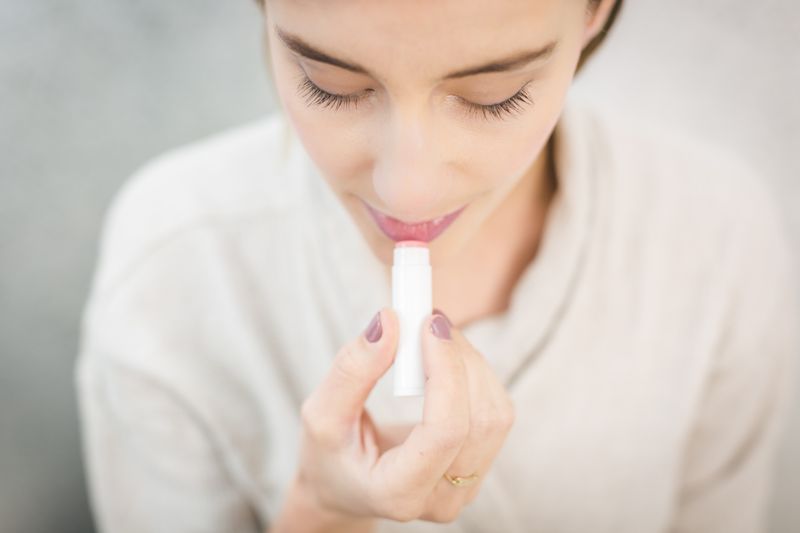
Stick balms deposit a fairly thin film, suit pockets and are convenient to reapply, which is most of their appeal. Pot and tube balms usually contain softer, more occlusive material and stay in place longer, particularly overnight. Ointment-textured products are the most effective for genuinely damaged lips and the least pleasant to wear in public.
Under makeup, reapplication frequency depends mainly on eating, drinking and licking, all of which remove the film mechanically.
A heavy balm at night does more good than frequent light applications through a day of coffee.
Ingredients worth a second look
Lanolin is highly effective on lips and is also a recognised contact allergen for a minority of people. Fragrance and flavour components are among the more common causes of lip irritation, and the two are chemically similar. Some sunscreen filters can be irritating on lip tissue, which is a nuisance given that lips need protection.
Colourants and dyes occasionally cause reactions, and a stain that persists after removal is worth noticing. Persistent inflammation of the lips or the skin around them should be assessed rather than treated with another balm.
Persistent, painful or changing skin conditions belong with a dermatologist rather than a routine.
When it is not just dryness
Cracking at the corners of the mouth has several possible causes including infection and nutritional factors, and it does not usually respond to balm. Persistent scaling, swelling or a burning sensation may indicate an inflammatory condition rather than simple dehydration. A rough patch or sore on the lip that does not heal within a couple of weeks deserves medical attention.
Reactions that appear each time a particular product is used point to a contact allergy that clinical patch testing can identify. Balm is a maintenance tool, and treating a genuine lip condition with it delays getting something that works.
Side by side
| Consideration | What it means in practice |
|---|---|
| What is in the tube | Waxes and butters block evaporation rather than supplying water. |
| Getting water underneath the seal | Humectants in a balm need water present to hold. |
| Why some balms feel like they make it worse | Reapplication frequency depends on how well the film survives eating and drinking. |
The takeaway
Put water on first and the seal on top, because a balm can only hold what is already there.
Skin changes slowly. Anything promising otherwise is selling the promise.
Questions readers ask
Is it possible to become dependent on lip balm?
There is no mechanism by which lips become dependent. The usual explanation is a balm containing irritants that keeps the underlying dryness going.
What is the best time to apply balm?
After eating and drinking, and generously before sleep. Overnight is when an occlusive has the longest uninterrupted period to work.