Lips
A lipstick shade is a filter, not a paint, unless it is fully opaque
Your own lip colour sits underneath and changes the result. That is why the bullet, the swatch and your mouth are three different colours.
Everything here earned its place by changing an outcome. Nothing about lipstick colour on the lip is included to round the number up.
What matters most
- Sheer formulas combine with your natural lip tone.
- Opacity depends on pigment load rather than on shade.
- Undertone of the lip shifts cool shades most visibly.
What happens to colour on the lip
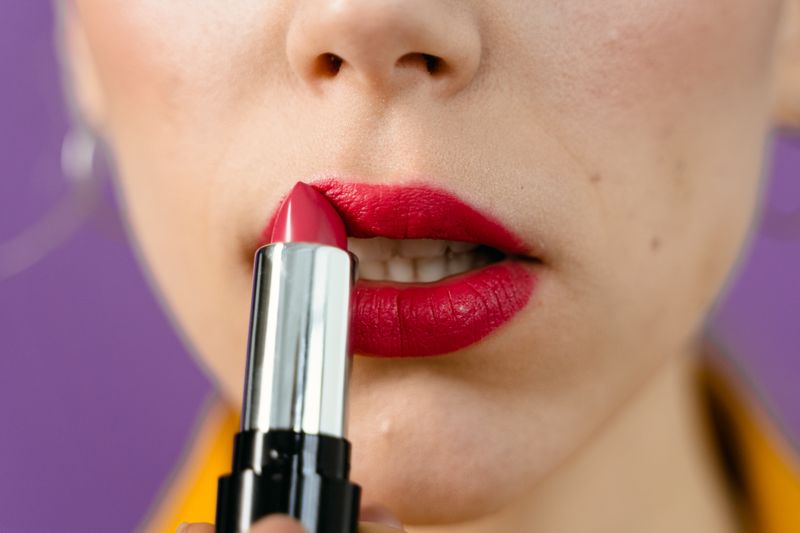
Lips carry their own colour, usually a pink to brown range determined by blood flow through thin tissue. Any lipstick that is not fully opaque combines with that colour, which is why the same shade differs between people.
Cool shades are affected most, since a warm natural lip shifts them noticeably toward a different hue. Deeper natural lip pigmentation reduces the visibility of pale and pastel shades considerably. This is a physical mixing effect rather than anything mysterious about how shades suit people.
Opacity is a formulation property
Pigment load, particle size and the presence of opacifiers such as titanium dioxide decide how much shows through. A highly opaque lipstick delivers the colour in the bullet almost exactly, regardless of what is underneath.
Sheer and balm-like formulas carry far less pigment and are effectively transparent films with a tint. Stains bind chemically to the surface and produce a result that always incorporates the natural tone. Knowing which category you are buying prevents the disappointment of a bullet that does not match the outcome.
Neutralising the base
A layer of concealer or foundation over the lip creates a neutral canvas, which is how the bullet colour is achieved exactly. The cost is comfort and wear, since another layer sits between the lipstick and the surface it needs to adhere to. A lip liner in a neutral tone across the whole lip achieves something similar with better adhesion.
On the ingredient list, both techniques flatten the natural gradient of the lip, which can look artificial in daylight. For most everyday wear, letting the natural tone participate produces a more convincing result.
Swatching that predicts anything
Arm swatches show the pigment against skin that is a different colour and texture from the lip. Fingertip swatches are closer, since fingertips have a similar pinkness, though the surface is still different. The only reliable test is on the lip itself, which is why testers with disposable applicators are worth using.
After four to six weeks, photographing the swatch in daylight removes the shop lighting problem that distorts every colour decision. Waiting several minutes matters too, since some formulas settle and darken as the volatile components evaporate.
Why shades look different across brands
Two lipsticks described as the same colour can use entirely different pigment combinations to arrive there. Those combinations behave differently under different lighting, which is the metamerism problem in miniature.
After four to six weeks, finish also changes perceived colour, since a matte and a gloss version of one shade read differently to the eye. Pigment loads vary enormously, so an identical shade name can be sheer in one product and opaque in another. Comparing swatches between brands online is therefore approximate at best.
Patch test anything new, and introduce one active at a time so you can tell what did what.
Finding what actually suits you
The old rules about undertone determining permissible lip colours are far more rigid than reality supports. Most people can wear a wide range once intensity and finish are adjusted rather than hue abandoned. A shade that looks difficult in full opacity often works perfectly when applied sheerly with a fingertip.
After four to six weeks, building intensity gradually is more informative than deciding from a single full application. The shade that makes you look tired in a mirror at midday is the honest verdict, whatever the swatch suggested.
Everything above, in order of what to do first
- What happens to colour on the lip. Lips carry their own colour, usually a pink to brown range determined by blood flow through thin tissue.
- Opacity is a formulation property. Pigment load, particle size and the presence of opacifiers such as titanium dioxide decide how much shows through.
- Neutralising the base. A layer of concealer or foundation over the lip creates a neutral canvas, which is how the bullet colour is achieved exactly.
- Swatching that predicts anything. Arm swatches show the pigment against skin that is a different colour and texture from the lip.
- Why shades look different across brands. Two lipsticks described as the same colour can use entirely different pigment combinations to arrive there.
- Finding what actually suits you. The old rules about undertone determining permissible lip colours are far more rigid than reality supports.
The takeaway
Swatch on the lip in daylight, because everywhere else is showing you a colour you will never wear.
Skin changes slowly. Anything promising otherwise is selling the promise.
Questions readers ask
Why does the same lipstick look different on me than on someone else?
Unless it is fully opaque, it mixes with the natural colour of the lip underneath, which differs between people and shifts the final hue.
How can I get the exact bullet colour?
Neutralise the lip first with concealer or a nude liner. Wear and comfort usually suffer, so it is a technique for specific looks rather than daily use.