Lips
Lip skin has no oil glands, and every lip problem starts there
The structure of the lip is genuinely different from the rest of the face. Once you know how, most of the standard lip advice explains itself.
This is written to be used rather than admired. Each section below is a decision about the structure of lip skin, and each one has a default.
Before you start
- The vermilion has no sebaceous glands and a very thin outer layer.
- Water is lost through lips faster than through facial skin.
- Licking accelerates drying rather than relieving it.
What makes lips different
The vermilion, the coloured part of the lip, has a much thinner outer layer than surrounding facial skin and far fewer cell layers above the living tissue. It contains no sebaceous glands, so there is no sebum film to slow evaporation, and no sweat glands to contribute surface moisture. The colour comes from blood vessels showing through that thin, translucent tissue rather than from pigment in the skin itself.
It also carries very little melanin in most people, which means minimal built-in protection from ultraviolet light. Every one of those differences pushes in the same direction, which is faster water loss and greater vulnerability.
Why they dry out so readily
Water leaves the lip surface considerably faster than it leaves cheek skin, which is why lips are the first thing to feel it in cold weather. Wind, dry indoor air and low humidity all accelerate the process, and the lip has no lipid film to defend itself with. Breathing through the mouth during sleep or exercise dries the surface directly by moving air across it.
On a compromised barrier, hot drinks, spicy food and acidic food all cause transient irritation on tissue with a very thin protective layer. The result is that lips need topical help routinely, whereas most facial skin manages without it.
The licking cycle
Saliva feels soothing for a moment because it wets the surface, and then evaporates, taking additional surface water with it. Saliva also contains digestive enzymes, which are not designed to sit on the outside of the body and can irritate the surrounding skin. Repeated licking produces a ring of irritated skin around the mouth that is often mistaken for a reaction to a product.
In children this pattern is common enough to have its own clinical description, and it is treated by breaking the habit and using an occlusive barrier. The practical answer is a balm kept somewhere reachable, so the automatic response becomes applying rather than licking.
Sun exposure and lips
Lips receive substantial ultraviolet exposure and have almost none of the pigment protection that facial skin relies on. The lower lip is more exposed by geometry and is where sun-related changes most often appear. Most lip products contain no ultraviolet filters at all, and glossy finishes may increase transmission rather than reduce it.
On a compromised barrier, balms with an SPF figure exist and are worth using outdoors, with the same reapplication logic as any other sunscreen.
Any persistent rough patch, sore or change on the lip that does not heal deserves a doctor's opinion rather than a new balm.
What a balm can and cannot do
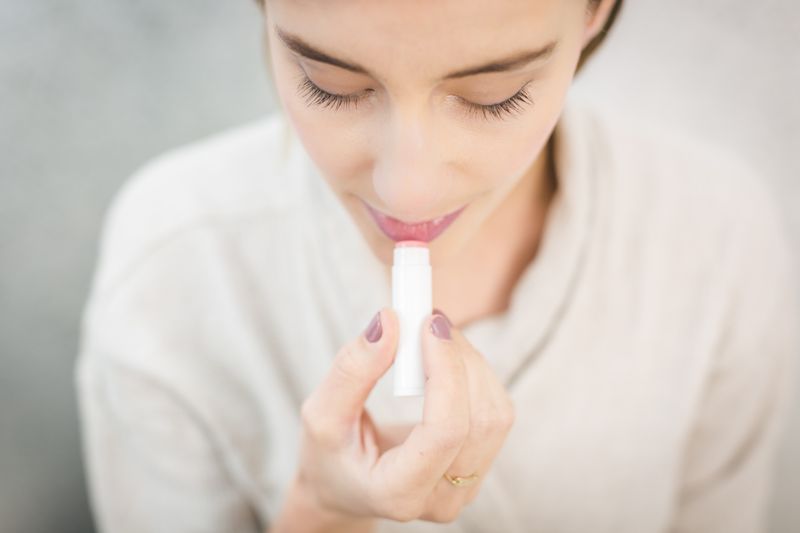
Balms are mostly occlusive, which means they slow water leaving rather than adding moisture to the tissue. That is genuinely useful, but it means applying balm to bone-dry lips traps a dry state rather than relieving it. Applying to slightly damp lips, or using a product containing humectants beneath an occlusive, gives a better result.
After four to six weeks, balms cannot repair cracks quickly, and deep fissures at the corners of the mouth may have other causes entirely. Persistent cracking at the corners in particular can have nutritional or infectious causes and is worth having looked at.
Persistent, painful or changing skin conditions belong with a dermatologist rather than a routine.
Habits that help more than products
Nasal breathing overnight, and a humidifier in dry bedrooms, address the environmental cause rather than the symptom. Removing long-wear lip products properly with an oil-based remover avoids the scrubbing that damages the surface.
At the strengths actually sold, reducing exfoliation, which is usually the cause of peeling rather than the cure, breaks the most common self-sustaining lip problem. Keeping one balm in each place you spend time removes the friction that stops people applying it. None of this is exciting, and it outperforms every specialised lip treatment on the market.
The takeaway
No oil glands, no pigment and no thickness means lips need help that the rest of your face does not.
A short routine you finish beats a long one you resent.
Questions readers ask
Why do my lips peel even when I use balm constantly?
Frequent balm use is not the problem, but frequent exfoliation usually is. Peeling is often a response to physical removal of a layer that had not finished shedding.
Do lips need sun protection?
Yes, particularly the lower lip, which has minimal pigment protection. Balms with filters exist and need reapplying like any other sunscreen.