Hair
Heat damage happens at a temperature, not at a setting
The dial number is a manufacturer's label; what matters is how hot the plate is and how wet the hair was. Both are within your control.
What follows is an argument about heat styling damage, and about where the received version of it stops being true.
The argument in brief
- Water inside the fibre expands rapidly when heated past boiling.
- Most tools offer far more heat than fine hair requires.
- Heat protectants reduce but do not eliminate damage.
What heat does to the fibre
Hair contains water bound within its structure, and heating drives that water out, temporarily making the fibre more pliable and reshapeable. That is the mechanism behind every hot styling tool, and it is also where the damage comes from when it goes too far. Excessive heat degrades the keratin structure itself, which cannot be reversed because the fibre has no repair capacity.
Repeated cycles of heating and cooling gradually erode the cuticle and weaken the cortex beneath it. The result accumulates over months, which is why heat damage often appears to arrive suddenly when it did not.
Wet hair and hot plates
Water boils at one hundred degrees, and styling tools commonly run at double that or more. Clamping a hot plate onto wet hair turns the water inside the fibre to steam, which expands and can rupture the structure from within. The result is sometimes visible as small bubbles or nodules along the shaft, and the affected section usually breaks.
By the end of a working day, hair should be genuinely dry before any flat iron or curling tool touches it, not merely towel-dried. Hair dryers are a different case, since they are designed to work on wet hair with moving air rather than contact heat.
Choosing a temperature
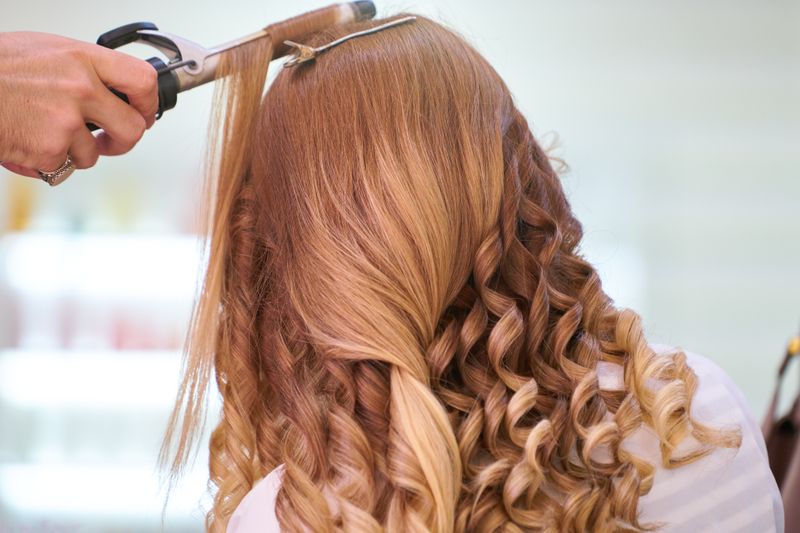
Most tools offer a range from around one hundred and fifty degrees up to two hundred and thirty at the top setting. Fine, light-coloured or previously bleached hair generally needs the lower end, and often achieves the result there.
Coarse, thick or resistant hair may need more, though starting low and increasing only if necessary is the sensible approach. Many people use the maximum setting by default and get no better result than a middle setting would have given. One pass at the right temperature causes less damage than three passes at a temperature that was too low.
Heat protectants and their limits
Heat protectants contain silicones, polymers and sometimes hydrolysed proteins that distribute heat and slow its transfer to the fibre. They reduce damage measurably and do not eliminate it, which is the honest description of what they achieve. Even application matters, since untreated sections receive full heat while protected sections do not.
The product needs to be dry before the tool touches the hair, which is another reason to finish drying properly first.
Using one is worthwhile every single time, and skipping it because the styling session is short is a false economy.
Reducing exposure overall
Air drying part of the way before using a dryer cuts total heat exposure substantially without changing the outcome. Sectioning hair properly means fewer passes with a straightener, which is the largest single variable people control. Using a lower dryer temperature with higher airflow dries hair effectively with less thermal stress.
By the end of a working day, heatless styling methods, from rollers to overnight braids, produce genuinely good results with practice. Alternating styling days rather than heat styling daily halves the cumulative exposure over a year.
If you are pregnant, breastfeeding or using prescription treatment, check specific actives with a doctor or pharmacist before adding them.
Recognising damage that has happened
Heat-damaged hair loses elasticity, feels rough regardless of conditioning and holds styles poorly. Colour-treated hair shows it sooner, since chemical processing has already thinned the cuticle.
By the end of a working day, curl patterns can be permanently loosened by excessive heat, which is a known and irreversible outcome. No product restores heat-damaged fibre, and the realistic options are managing appearance or cutting the affected length. If damage appears without heavy styling, or comes with scalp symptoms, a doctor is a more useful stop than a salon.
The takeaway
Dry hair completely, start at the lowest temperature that works, and count your passes.
Skin changes slowly. Anything promising otherwise is selling the promise.
Questions readers ask
Is a lower setting always safer?
Not if it means more passes. One pass at an adequate temperature usually causes less total damage than repeated passes at a temperature that will not do the job.
Do heat protectants really work?
They reduce heat transfer to the fibre measurably. They do not make high temperatures safe, and applying them unevenly leaves sections unprotected.