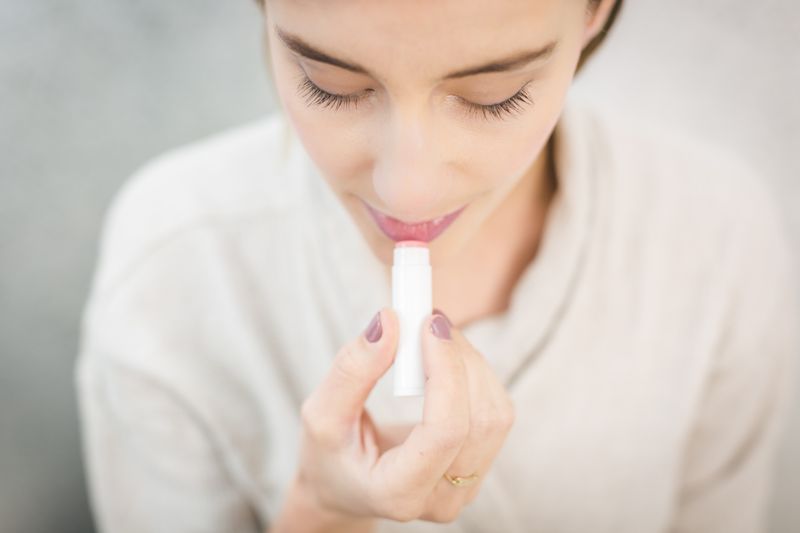
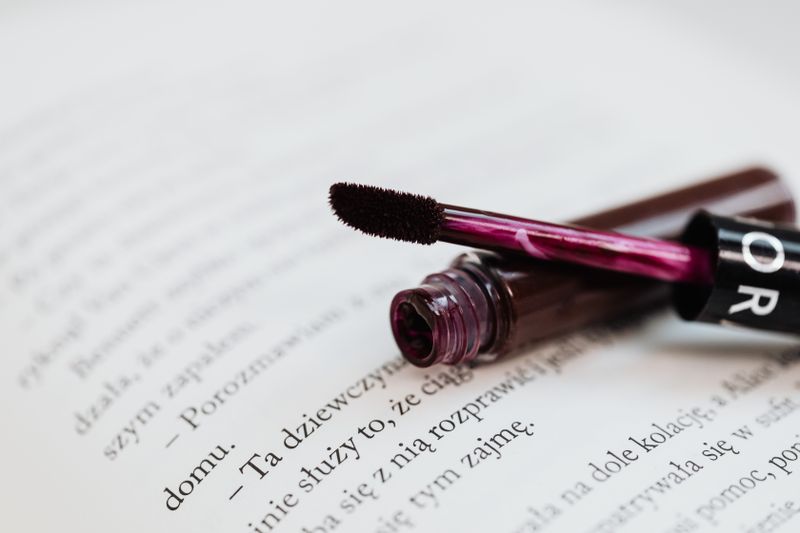
Lips
Lipstick wears off in a pattern, and the pattern tells you what to change
Colour disappearing from the centre first means one thing and colour going from the edges means another. Reading the wear pattern beats buying another tube.

Most explanations of how lip colour wears through a day stop at the point where it starts to matter. This one carries on.
The short version
- Centre-out wear points to eating, drinking and mouth contact.
- Edge-first wear points to migration and lip movement.
- Reapplying over worn product builds thickness instead of restoring colour.
Why lips lose colour faster than anything else
Lips are in contact with cups, cutlery, food, teeth and each other more or less constantly through a waking day. They have no oil glands to renew their own surface and no stable dry surface for a product to grip. The skin there is thin, constantly moving and regularly wet from the inside, which is a hostile combination for any film.
Every long-wear technology in the category is an attempt to work around those three facts at once. Nothing on the market survives a meal intact, and any product suggesting otherwise is describing a laboratory rather than a lunch.
Wearing from the centre outward
Colour that disappears from the middle first while the border stays intact is being removed by contact rather than migration. Cups are the main culprit, since the inner edge of the lip presses against a rim repeatedly across a single drink.
Eating removes it faster still, and oily food removes it fastest because oil dissolves the waxes holding pigment in place. A straw genuinely helps with drinks and does nothing for food, which is the honest limit of that advice. The pattern usually means the formula is fine and the day simply included a meal.
Wearing from the edges inward
Colour that goes at the border while the centre survives is migrating into the surrounding skin rather than being removed. That points to an oil-rich formula, warm conditions or fine lines around the mouth acting as channels.
A wax-based liner along the border slows it, and a drier formula slows it further at the cost of comfort. This pattern also appears when lips are dry, since a flaking surface holds colour unevenly at the edges. The fix here is preparation and formula rather than technique during the day.
Making it last without long-wear formulas
Blotting after the first application removes surplus oil while leaving pigment, which is the single most effective free technique. A thin second layer after blotting restores colour without restoring the mobile phase you just removed.
On the ingredient list, pressing a tissue over the lips and dusting translucent powder through it sets the surface without a visible powder layer. Filling the whole lip with liner before colour gives a base that holds pigment as the top layer wears.
Together these get an ordinary lipstick through most of a working morning.
Reapplying properly
Applying fresh colour directly over worn product builds an uneven thickness where the old layer remains and a thin patch where it went. Blotting first with a tissue evens the base, and one pass afterwards usually looks better than three passes without it.
On a compromised barrier, reapplying only to the centre and blending outward matches the wear pattern of most people and uses less product. Balm applied over a worn lipstick revives comfort and shine and pushes remaining pigment outward, so use it sparingly. A liner in the bag is more useful for a mid-afternoon repair than a second lipstick, since the border is what fails first.
Deciding what the day requires
For a day involving meetings and no meals, a comfortable satin formula reapplied once is entirely sufficient. For a long event with food, a transfer-resistant liquid formula or a stain is the format that matches the demand.
For a day when you will forget to check, a stain or a tinted balm in a shade close to your own lips fails invisibly. Matching format to day removes most of the frustration people blame on individual products. The most comfortable formula you own is usually the right answer, provided you accept that it will need attention.
The takeaway
Look at where the colour went before deciding what to buy, because the two common patterns need opposite fixes.
Skin changes slowly. Anything promising otherwise is selling the promise.
Questions readers ask
How do I stop lipstick coming off on cups?
Blot after the first layer, apply a thin second and set through a tissue. Transfer-resistant formulas do it more reliably at the cost of comfort.
Should I reapply over what is left?
Blot first. Applying over worn product builds thickness where colour remains and leaves the worn area still thin, which shows in daylight.
Also by Tanya Sabharwal
- The skin barrier is a physical structure, not a marketing wordSkincare
- Mineral and organic filters reach the same result by different chemistrySkincare
- A moisturiser does three separate jobs, and most people only want twoSkincare
- AHAs and BHAs differ by solubility, and that decides where they can reachIngredients